


Broken Sword: The Sleeping Dragon ( 2003) 


| Details (Xbox) | Supported platforms | Artwork and Media | |
|---|---|---|---|
| Publisher: Genre: Author(s): Maximum Players: Joysticks: Language: Media Code: Media Type: Country of Release: Comments: |  THQ THQAdventure / Graphical Revolution Software Standard Xbox Controller/Controller S Eng DVD (Protected) Worldwide | Xbox |
| Videos | Screenshots (Xbox) |
|---|---|
| (no videos on file) |     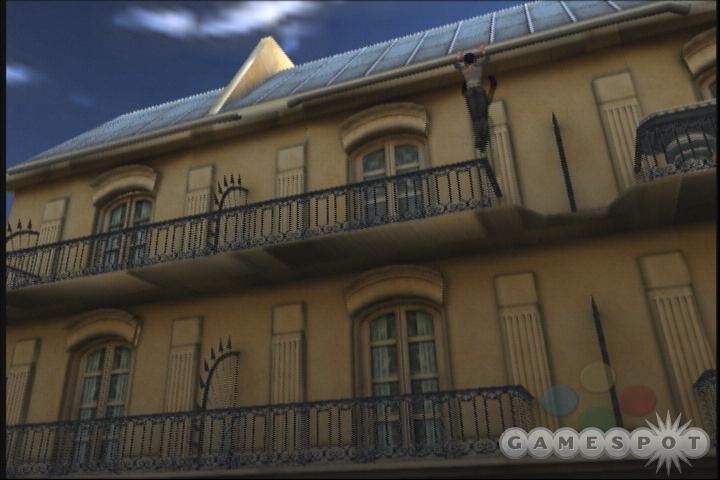 |
Please login to submit a screenshot
| Your Reviews |
|---|
 (Anonymous) (Unknown) 28th Mar 2012 02:55
"George and the Dragon"
Entering the Spitting Contest on Scabb Island. Sam and Max hitting the road. Taking an elevator from the chamber under Dinky Island and ending up back in the first game. Insult swordfighting. Discovering the mysteries of The Dig. Defeating the Neo-Templars. The stump. Murray the Talking Skull.... Point-and-Click games were ace, until the Internet killed them. Half the fun of the genre was getting stuck on a puzzle for days, or even weeks, only to suddenly find inspiration and think outside the box enough to proceed further - there really was nothing else in gaming to match that sense of achievement. But then as the Internet became used for more than just pornography, Point-and-Click gamers suddenly had access to all the answers whenever they needed them. Whereas before all they had if they were lucky was an automated phone number in the manual, offering hints that really weren't much help anyway, now they had detailed walkthroughs at the touch of a button. The sense of achievement and discovery was swept away as every puzzle was solved with a quick trip to the Net instead of a long period of abstract thinking. The genre languished, and seemed to die. And as it lay dormant like a lactose-intolerant volcano, the world moved on. The mysterious third dimension snuck into games, and changed everything. It would be some time before a Point-and-Click champion rose again, but finally the day has come. George Stobbart and Nico Collard are back, but is there still a place for their slow-paced adventuring, or has the gaming world moved on too much.....?
Broken Sword: The Sleeping Dragon picks up the action several years after the previous games in the series, and our two principal characters have long gone their separate ways. Nico - still working as a reporter - is called to the Parisian apartment of a reclusive hacker, who claims to have information regarding an impending Armageddon. She arrives on the scene, sceptical, only to find that the hacker is dead - shot in his locked apartment - and an eye witness claims that Nico is the murderer. Meanwhile, All-American patent lawyer George is travelling to the depths of the jungle to meet an eccentric scientist with regards to patenting his latest invention. On the way, though, a mysterious storm whips up out of nowhere, and consumes George's plane. It's going to be a bumpy landing for our hero. And it's gonna be a hell of a ride from here on out, as these two seemingly separate plots thunder towards each other, on the way taking in English folklore, the legacy of the Knights Templar, dark conspiracies, lay lines, mysterious rumours of an ancient energy that is perhaps the very lifeblood of the planet, and a barmy traffic warden who believes she is saving the world from aliens.....
If you've played a Broken Sword game before, you'll know what to expect from the plot in The Sleeping Dragon. It's a thoroughly enjoyable - if a little predictable - adventure tale, the sort that you'd find in a film on TV on a Sunday afternoon. With the chisel-jawed American hero, the delectable-but-slightly-kidnap-happy female lead, and the sinister, scarf-wearing villain, all the stereotypical main characters are in place, and the globe-trotting that is called for (from the streets of Paris, to Glastonbury, to the Congo and beyond) adds a nice epic scale to the proceedings. It's nothing that you haven't seen before, but it's great fun, and should be enough to keep most players interested up until the final scenes of the game. But a strong plot has always been a staple ingredient of the genre - the question is just how have Revolution Software managed to translate the Point-and-Click gameplay to the modern generation of consoles?
The answer, it seems, is by mostly removing all pointing and clicking. With the move to the third dimension, the developers have wisely chosen to grant you full direct control over your character (either George or Nico, depending on the scene) with the analogue stick. At first this may make The Sleeping Dragon seem like any other 3D action game, but as soon as you start to get to grips with the first scene of the game - in which George must attempt to escape the downed plane - you'll realise that this is not the case. Despite the move to full 3D, at heart the traditions and trappings of the old 2D Point-and-Click genre live on. It's a marvellous scene that sets the tone for the rest of the game perfectly: in order to escape the plane, which hangs perilously over the edge of a cliff in true Hollywood style, George must revive Harry, the Aussie pilot who was knocked unconscious in the crash. After some experimentation, it becomes apparent that the only way to do this is to find a bottle of beer and a bottle opener lying around in the plane - opening the bottle near Harry brings him back to his senses (what with him being Australian, and therefore a drunkard - well-meaning stereotypes abound in The Sleeping Dragon). The mechanics by which you solve this problem may have changed - George now explores and picks up items in a normal 3D way, rather than by way of a cursor and a list of options - but it's clear that the old-fashioned abstract puzzle-solving is still very much the order of the day. And that's a good thing.
This type of puzzle-solving may make The Sleeping Dragon feel a bit too slow-paced for many action-loving gamers, but those willing to give it a chance will find a very rewarding experience. As the mystery deepens, with plenty of plot-twists and entertaining cutscenes along the way (which are usually preceded by some unforgivably long loading times), George and Nico find themselves visiting far more elaborate and detailed environments, but the basic play remains the same - you enter a new area, you chat to the various characters that you meet there (with some often humorous results), you pick up as many items as you can, and spend a lot of time (provided you avoid the lure of the walkthrough) just experimenting with them in various locations to see what happens. There's only ever one solution to each puzzle, and it always makes a sort of sense - after spending a long time trying to work out how to use the stick of grease paint in the theatre as a lubricant (steady....), for example, it eventually becomes apparent that you must stick it in a beat up paper cup that you seem to be carrying around, before melting it on a hot lightbulb that had previously burned you. The answers are always right there, provided you are willing to think about things a little. On occasion things can become a little too abstract - using the aforementioned bottle opener to wedge open an elevator door seems a touch silly when you have a perfectly good metal rod in your inventory that could surely do a better job, say, but on the whole re-entering the mindset that you needed for games like Monkey Island in the past is a real pleasure, and provided you loved the genre first time around, much of The Sleeping Dragon will leave you with a warm nostalgic glow in your stomach and a massive grin on your face.
However, it seems that the developers were very aware that the slow investigatory pace may not cut it with adrenaline-crazed modern gamers, and as such some more unexpected aspects of the 3D action genre have crept in to The Sleeping Dragon. First up are the frequent puzzles that see you pulling and pushing crates around to reach new areas, or to activate various floor panels. This sort of challenge was crap when Lara Croft first tried it in the genre-defining original Tomb Raider, and frankly it's still crap now. All the tension built up in the realisation that a character you have travelled half the world to meet is stuck in a burning building is sapped away when you have to spend a-quater-of-an-hour fiddling with various boxes in order to enter the blazing barn to rescue him (a task that wouldn't have been too difficult but for the fixed camera angles). It's a scientific fact that nobody likes games where you are faced with repeated crate-pushing puzzles, and it's a real shame to see this outdated device permeating such a well-crafted adventure.
And it's not just the tendency toward box-bothering that George and Nico have stolen from Ms. Croft (and I'm not talking about the somewhat implausible amount of time that seems to have gone in to making Nico's buttocks as realistic as possible....). In order to appeal to fans of a more fast-paced style of gaming, Revolution have included frequent moments where you must employ your character's more acrobatic nature - leaping from ledge to ledge, scrambling along thing platforms and shimmying along overhangs using only your fingertips. There's nothing wrong with this sort of behaviour - in fact it is positively encouraged under usual circumstances - but here it falls flat due to the fact that, with The Sleeping Dragon being a Point-and-Click more than anything, Revolution have removed any chance of your character dying. You can only jump when you are certain to land somewhere safe. You can only drop off a ledge when there's somewhere to drop to, and never by accident. In small doses - such as shimmying along the edge of a balcony to gain access to a locked apartment, or navigating a lighting rig high above a theatre stage - this can add to the epic feel of the game and is very welcome. But in prolonged instances of ledge-based antics, it becomes intensely dull. With all possibility of peril removed, spending five minutes painstakingly navigating a cliff-face becomes an exercise in tedium. As with the crate-pushing, you can't help but feel that it detracts from the overall experience, rather than adding to it.
The move to 3D has also robbed The Sleeping Dragon of much of the charm that littered the previous Broken Sword games. As lovely as the 3D environments look, along with some stunningly cinematic camera angles, it essentially now looks like any other 3D adventure game - none of the cartoonish individuality has been translated to this latest offering, which can make things feel a touch awkward at times: a game where you spend a significant amount of time with a dirty pair of underpants in your inventory just isn't really suited to sinister - yet spectacular - lighting effects and realistic environments. It's a shame to see this go - along with the greater sense of character afforded in the surprisingly expressive cartoon faces of old, which are replaced by polygonal standard-looking characters - as the only way that the humour and pathos of the game can now be presented is in the voice acting, which - though generally good - can become a bit grating thanks to an abundance of comedy French accents, and the occasional glitch that sees more than one character talking at one, so that you can't understand either. It's a pity, and is once more a sign that not even the developers themselves were sure that there was still a place for a traditional Broken Sword game in today's market.
And that is the real question here - can the Point-and-Click genre still deliver in today's world? Despite it's flaws, The Sleeping Dragon suggests so. Ironically, for a game where the developers have attempted to throw many more modern gameplay conventions into an old-fashioned style of play, it is when The Sleeping Dragon is at it's most traditional that it really shines. When it's being a pure Point-and-Click title, the game is genuinely superb, and the plot that carries it along is magnificent. It's when the game tries to feel more modern that it all falls apart slightly, and becomes a little uninspired. It's still a very worthy way to spend a week or two, and is still great fun, but you can't help but wonder how great it really could have been had the developers just had enough faith in the genre to keep things pure. There is still a place for this type of game, now all we need is a developer confident enough to believe it.
Reviewer's Score: 7/10, Originally Posted: 09/25/06
| Cheats | Trivia |
|---|---|
| There are no cheats on file for this title. | No trivia on file for this title. |
History
This title was first added on 7th December 2005
This title was most recently updated on 28th March 2012